In such a diverse community as Troy, I feel like I (very luckily) haven’t been exposed to much, or any, racial segregation. However, I was extremely shocked to hear that Michigan was one of the highest segregated states in the nation. This sparked some curiosity within me, and as most curiosities lead me to do, I began researching.
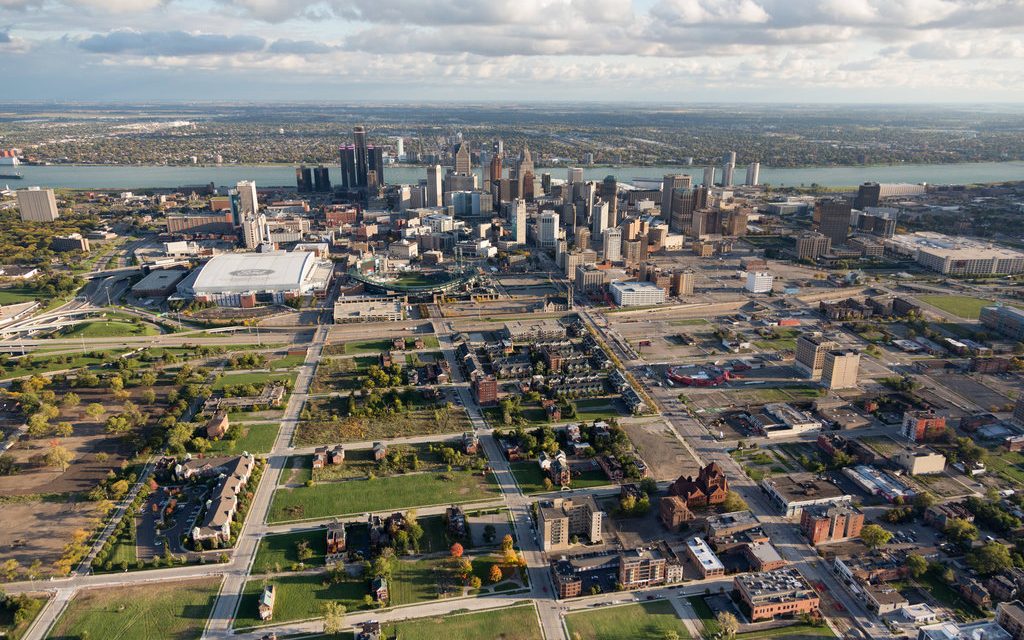 After some research, I found that 10 out of 11 of Michigan’s largest metropolitan areas suffer high amounts of segregation! What?! I feel like a blindfold is being removed from my eyes. Whether it’s a combination of my privileges, and living in an extremely diverse and accepting community, I’ll never personally figure out. As the new U.S. Census approaches in 2020, many metropolitan areas’ populations are being recorded. Recently, the U.S. Census Bureau found that Detroit ranks as the fourth most segregated metro area in the country. It’s only “outdone” by Milwaukee, Chicago, and New York. In regards to housing (as spoken about in class and for the redlining video), some other large cities in Michigan have high rates of racial segregation. The Census Bureau between the years 2013-2017 crunched some numbers and came up with a ranking of specifically black and white racial segregation. The “score” is on a scale called the dissimilarity index, and is commonly used by sociologists to find out how evenly distributed certain demographic groups are throughout an urban-suburban area. Each metro area is given a score on a range from 0 (fully integrated) to 1 (fully segregated). For reference, the national average is .526. Now according to the U.S. Census Bureau’s studies between 2013 and 2017, here are some Michigan cities’ results ranking from “highest” segregation score to “lowest”: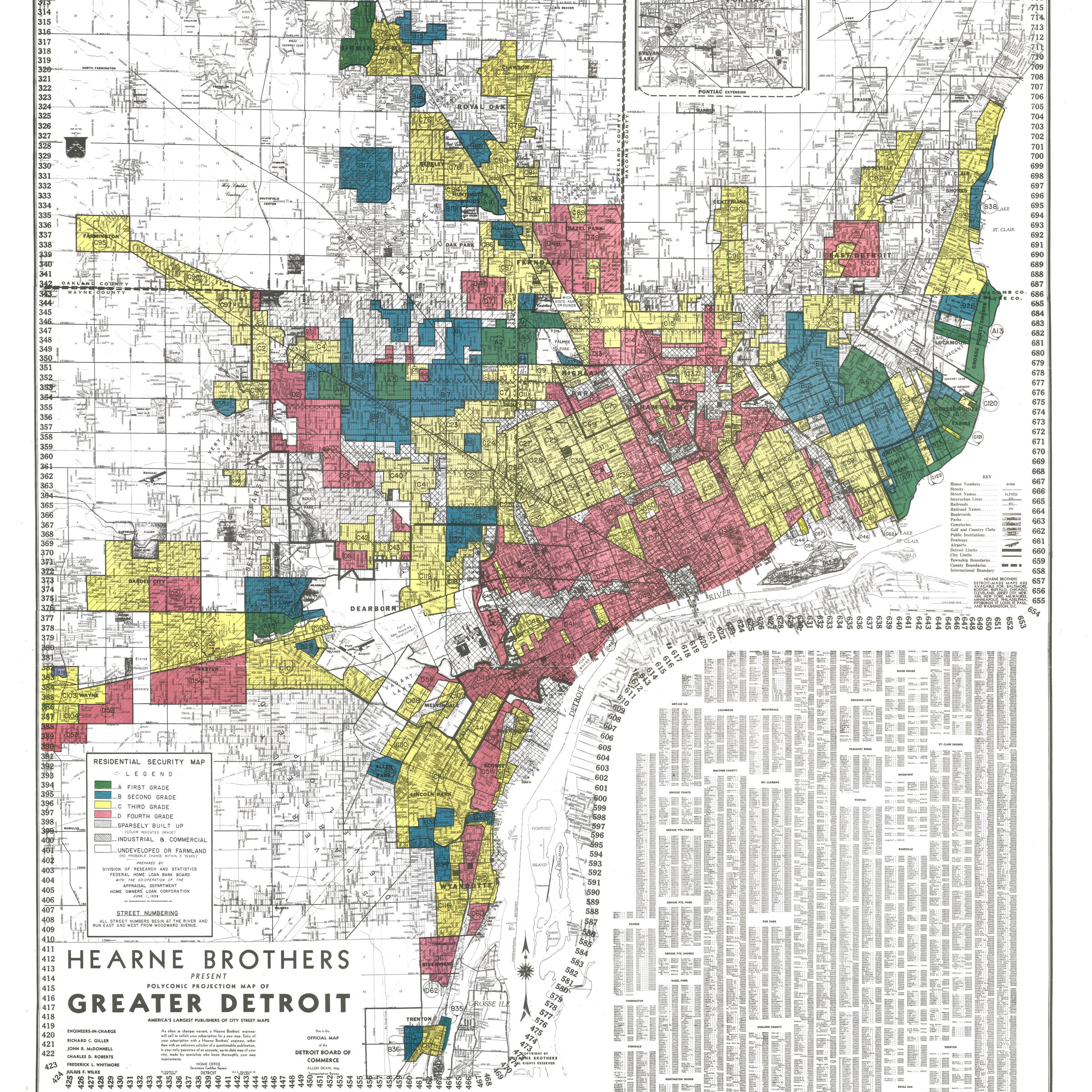
- Detroit --- .737
- Muskegon --- .719
- Niles --- .718
- Flint --- .666
- Saginaw --- .649
- Grand Rapids --- .640
- Battle Creek --- .598
- Jackson --- .595
- Lansing --- .584
- Ann Arbor --- .555
- Kalamazoo --- .497
Going back to the fact that I stated at the beginning of this post, only one out of Michigan’s 11 largest metropolitan areas has a dissimilarity index score of under the national average. That’s awful!!!! A shown, Kalamazoo is the state’s only metro area that falls below the national average. Detroit, ranking as the highest, is shown numerically to sadly be one of the nation’s highest segregated metro areas.
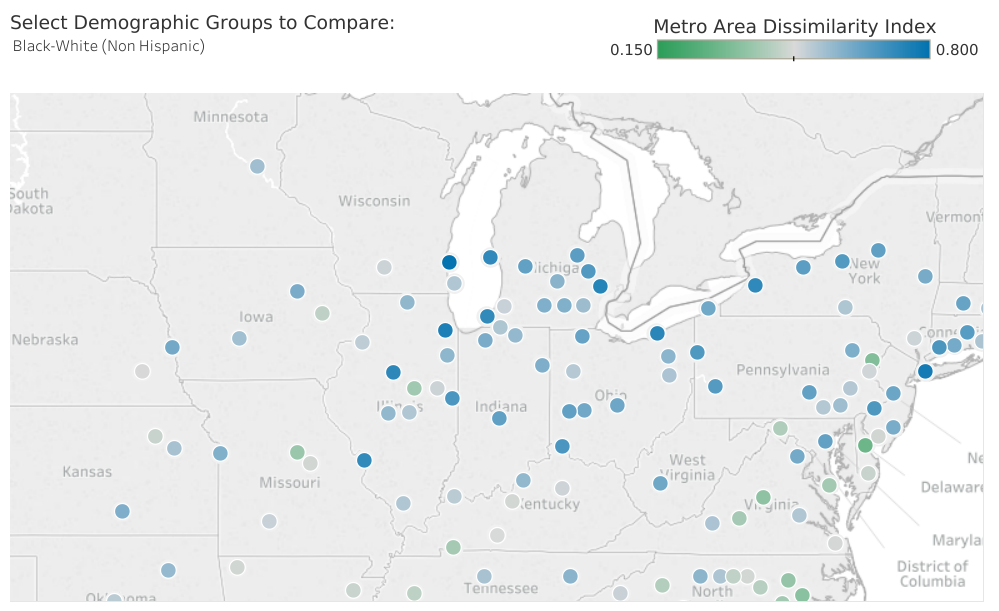
When I was researching, I assumed that southern states would have the highest amounts of segregation. Surprisingly, some of the most integrated cities in the U.S. are in the South – in North Carolina and South Carolina and, to a lesser extent, Georgia and Alabama. That was so crazy to me! Contrary to what I thought was a popular belief, the Midwest and Northeast have the most problems with segregated metro areas. Finally, to go back to the topic of housing specifically, more than 50 years after Congress passed the Fair Housing Act in 1968, racial segregation still persists across America. Sadly, it’s still greatly persisting all across our home (pun intended) state, Michigan.
For some reason I can't put this image next to the dissimilarity index scores, but here's a map that shows the dissimilarity index scores around the Midwest:
This is so sad Lauren! Thank you for your extensive amount of research about this! I kind of think it makes sense that the cities in the southern states are more integrated, because they were the first to be. It was in the south that the schools were first integrated, and it makes sense that that's just never changed. I think what people don't realize is that maybe the north wasn't as well receiving of African Americans as everyone thought. The north claimed to welcome them and was even a place for blacks to escape slavery at on point, but in reality, the people already settled in the north, especially the white people, kind of shoved all the blacks into these "boxes" or neighborhoods. They told them "you can be here, but in only these areas where you won't affect anyone else, or live better than us." It is only just coming to light that this must've happened so long ago in order for our cities today to still be so segregated. People are still scared of integration; and the patterns, and the "vicious cycle" that Sohil talked about, just continue.
ReplyDelete