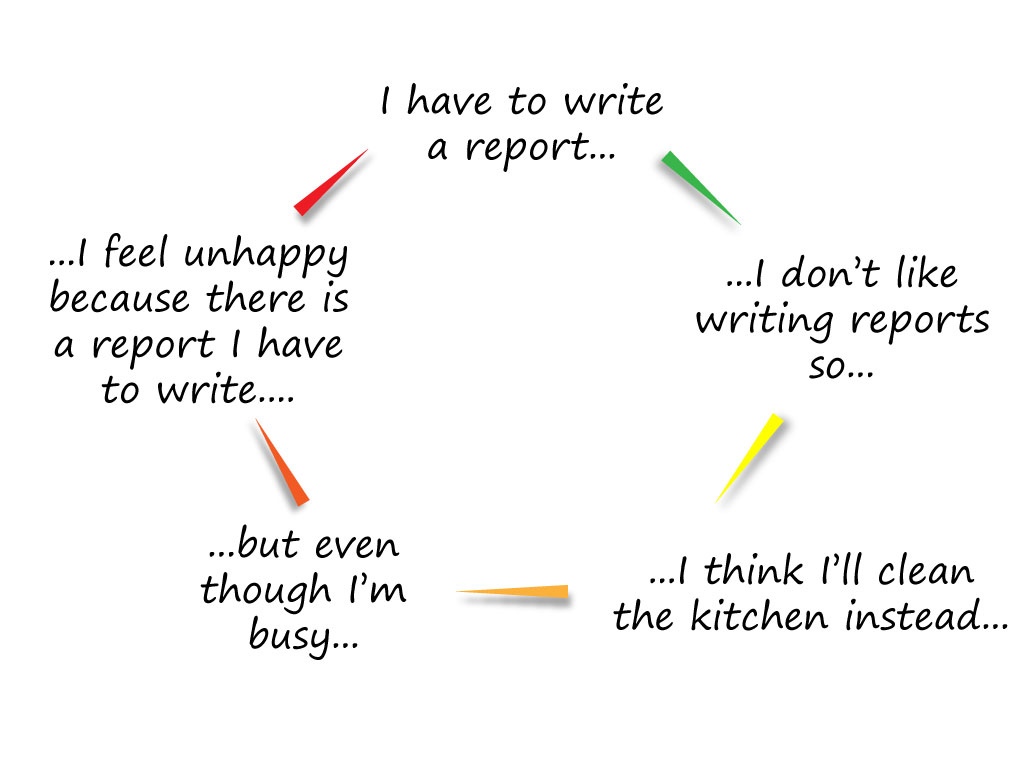
 Procrastination. A plague we all fall susceptible to. My inspiration to learn about this stemmed from two things: procrastinating from writing this post, and using the research about procrastination to procrastinate from studying for my other classes. Whew, by the end of this post I might need to have a “procrastination” counter. This topic hits very hard to home for me, and I know it does to many of my peers as well. The definition of my familiar friend procrastination is, “the avoidance of work or necessary tasks by focusing on more satisfying activities”. Just by reading that definition I feel personally attacked and victimized. Although, I have to realize my terrible procrastination is self inflicted….
Now for what this whole blog post is about, why people procrastinate. It’s really easy to blame procrastinating on laziness, bad habits, and simply a lack of motivation. However upon my research, there is a chemical reason for procrastinating. Procrastination is simply just conflict between the limbic system and the prefrontal cortex. The limbic system is “a set of brain structures containing the pleasure center”, while the prefrontal cortex “controls planning and decision making”. The prefrontal cortex is less developed, making it weaker, so often times the limbic system beats it in the battle for control, leading to procrastination. I found that there are three different types of procrastinators. Man, I bet a buzzfeed quiz has been made determining which type of procrastinator someone is. Anyways, here are the three types:
- Thrill-seekers: enjoy the rush that comes with racing to meet deadline, and so they procrastinate to catalyze that experience.
- Avoiders: procrastinate out of fear of being judged for both successful and unsuccessful work.
- Indecisive: put off tasks to avoid the blame for a sub-par end product.
 Personally, I know for a fact that I’m not the first option, and a mix between the second and third. Before researching, I thought I was just lacking motivation to get all my homework done at a reasonable time, but these classifications of procrastinators are really calling me out! I feel like the second and third types of procrastinators are targeted at me (and many others too), and have given me some insight on the deeper meanings of why people procrastinate.
  To follow being singled out on a mental level about fear of judgement, what would the purpose of research be if a solution wasn’t presented! Overcoming procrastination is difficult, but possible. The most effective method is taking preventative measures. Although it’s hard, a really important thing to do is to schedule and complete tasks ahead of time. For example, if you are able to work a little bit on a project, studying, or homework each night, you’ll have much less (or nothing!) to do the night before the deadline. In regards to the types of procrastinators not focusing and getting mentally blockaded by the idea of a perfect, finished end result is crucial. Instead, getting a head start can enable free time later on that can be dedicated to refining the assignment or studying more. So get out there and get started; you’ll be thanking yourself later!
As to uphold what I said in the beginning, here’s the count of all procrastinate (and other conjugations) that are present throughout the entirety of the blog post.
Procrastinate count: 23
Lauren I totally appreciate the amount of research that went into this blog post because I always research a lot in order to write my own blog posts as well! I find your research absolutely fascinating even though I don't suffer from procrastination that much. I only procrastinate when I really really want to avoid an assignment because it looks so daunting or boring, but the majority of the time I am that person that gets all their homework done on Friday and then if I have studying to do, I do a little bit every day (yes I am that person).
ReplyDelete